Barred Plymouth Rock
Barred Plymouth Rock Chicken Breed Guide
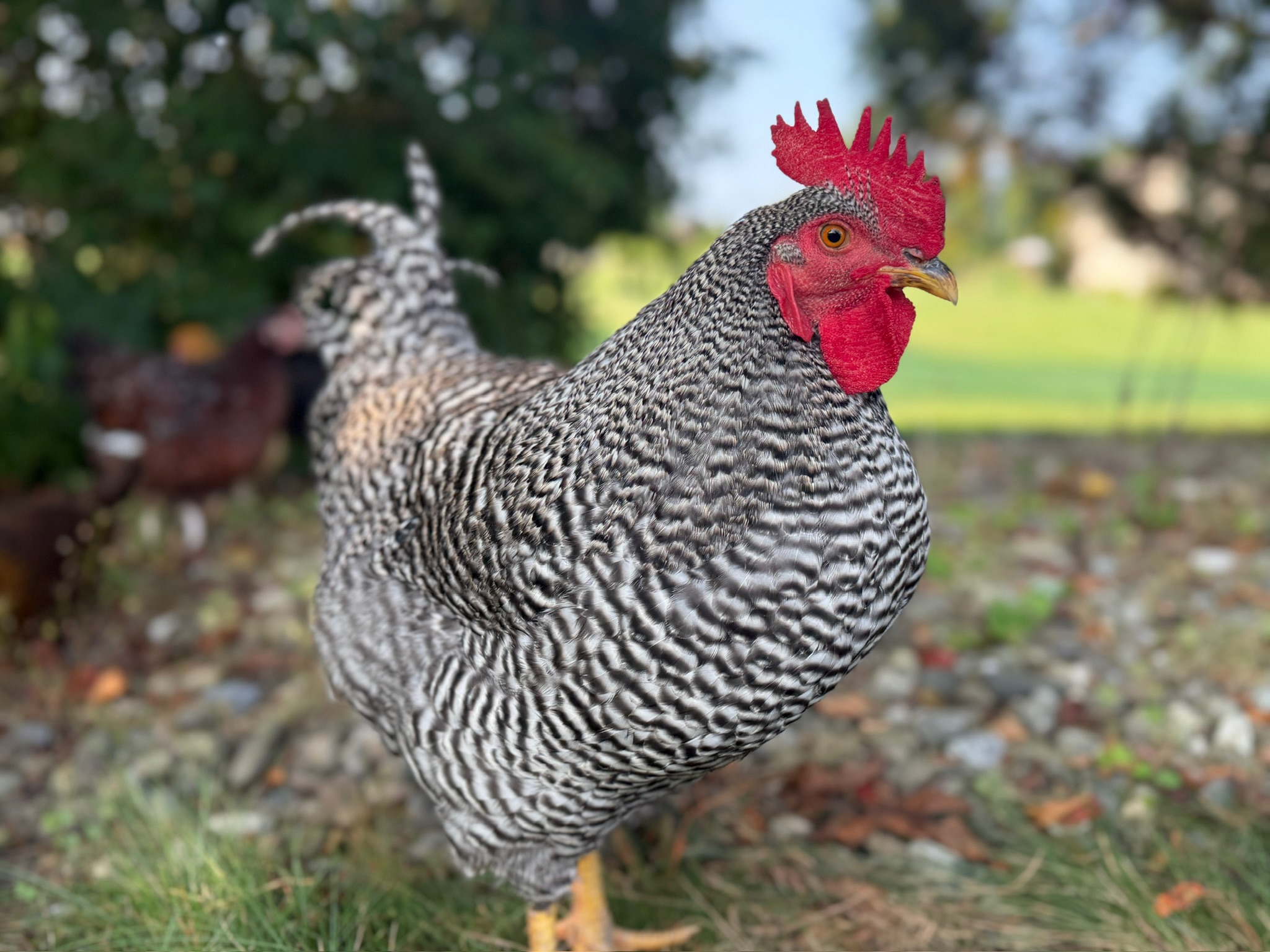
The Barred Plymouth Rock, often simply called the Plymouth Rock, is one of America’s most historic and dependable chicken breeds. Known for its distinctive black-and-white barred feathers, calm personality, and strong egg production, it’s a favorite among backyard chicken keepers.
Temperament and Personality
Barred Plymouth Rocks are widely regarded as friendly, calm, and easy to manage. They are often recommended for beginners due to their predictable temperament.
They tend to be:
- Gentle
- Curious
- Comfortable around people
In mixed flocks, they are usually balanced in the pecking order — not overly dominant, but not timid either.
Egg Production
Barred Plymouth Rock hens typically lay 200–250 large brown eggs per year.
They begin laying around 18–20 weeks of age and maintain steady production. While not as high-producing as Rhode Island Reds, they are very consistent and dependable.
They may become broody occasionally, but not excessively.
Cold Hardiness and Climate Suitability
Barred Plymouth Rocks are considered highly cold hardy due to their dense feathering and sturdy build.
For backyard flocks in New Jersey, they perform very well in winter conditions when provided with proper coop ventilation.
They tolerate summer heat reasonably well, though shade and airflow are important in humid climates.
Size and Appearance
Barred Plymouth Rocks are a dual-purpose breed.
- Hens weigh around 6–7 pounds
- Roosters can reach 8–9 pounds
Their black-and-white barred feather pattern is striking and easily recognizable. Roosters tend to appear lighter in color due to wider white barring.
Broodiness and Mothering
Barred Plymouth Rock hens may go broody from time to time. When they do, they can make attentive and reliable mothers.
If you are interested in occasionally hatching chicks naturally, they are more dependable than Rhode Island Reds in this regard.
Pros and Cons of Barred Plymouth Rock Chickens
Pros
- Friendly and beginner-friendly
- Cold hardy
- Good brown egg production
- Dual-purpose breed
- Attractive barred pattern
Cons
- Moderate (not maximum) egg production
- Can become broody occasionally
- Larger size requires adequate coop space
Is the Barred Plymouth Rock Right for You?
If you want a calm, reliable brown egg layer that handles New Jersey winters well, the Barred Plymouth Rock is a strong choice. They are especially well-suited for beginners and families who want a steady, manageable backyard flock.